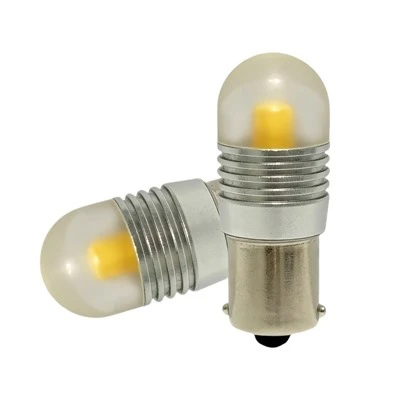
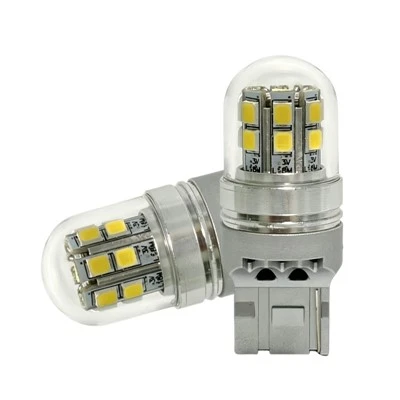
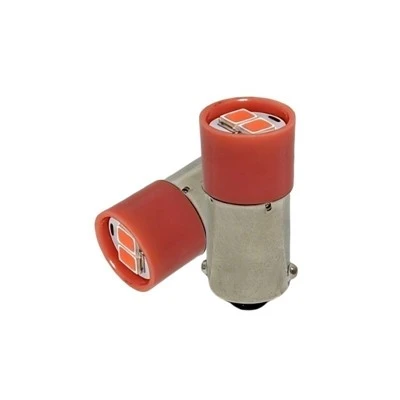
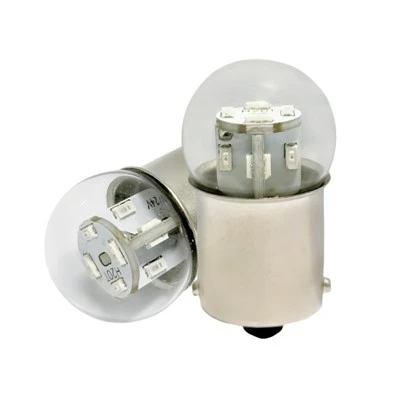
An automotive bulb is a lighting device specifically designed for motor vehicles. Its core function is to provide road illumination at night or in low-visibility conditions, ensuring the safety of the driver and other road users. From a technical perspective, an automotive bulb consists of key components such as a filament, a gas-filled material (such as halogen gas), a glass casing, and a metal base. These components work together to achieve efficient light emission and durability.
The core concept of an automotive bulb revolves around its light source characteristics. Traditional automotive bulbs primarily use tungsten filaments as the light-emitting material, generating high temperatures and emitting visible light when an electric current passes through them. With technological advancements, halogen bulbs have become the mainstream choice. The halogen gas filling them slows down the evaporation of the tungsten filament, thus extending bulb life and maintaining stable brightness. In recent years, LED and laser bulbs have become increasingly popular, gradually replacing traditional bulbs due to their higher energy efficiency, longer lifespan, and stronger light penetration.
The design of automotive bulbs must comply with stringent industry standards and regulations. For example, the International Organization for Standardization (ISO) and the Economic Commission for Europe (ECE) have set clear specifications for the luminous flux, color temperature, energy consumption, and mounting interfaces of automotive bulbs. These standards ensure the compatibility of bulbs across different vehicle models and guarantee their reliable performance under various environmental conditions. Automotive bulbs must also meet specific safety requirements, such as anti-glare design, to avoid interfering with other road users.
The function of automotive bulbs extends beyond basic lighting; they also involve signal transmission and aesthetic decoration. Various types of bulbs, including headlights, fog lights, turn signals, brake lights, and interior ambient lighting, must be optimized for their specific applications. For example, headlights need to have high/low beam switching capabilities to adapt to different driving scenarios; while ambient lighting focuses on color reproduction and visual effects, adding personalized elements to the driving experience.
Automotive bulbs are complex products integrating functionality, safety, and technology. Their definition encompasses multiple dimensions, including light source principles, technical characteristics, industry standards, and diverse application scenarios. This comprehensive definition helps to better understand the important role of automotive bulbs in the entire automotive industry and their future development trends.