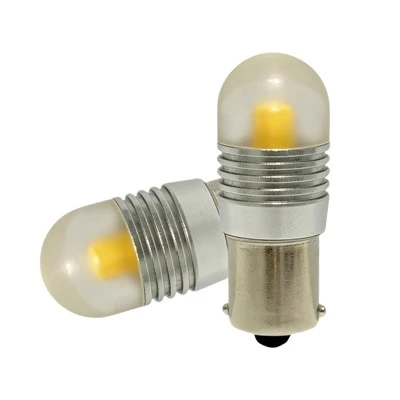
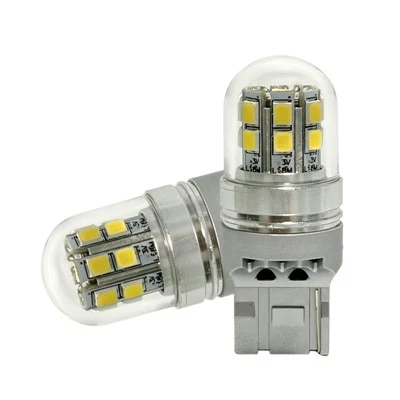
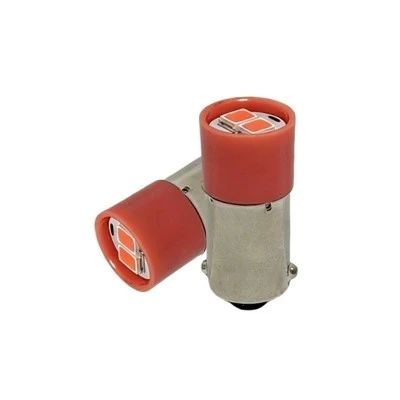
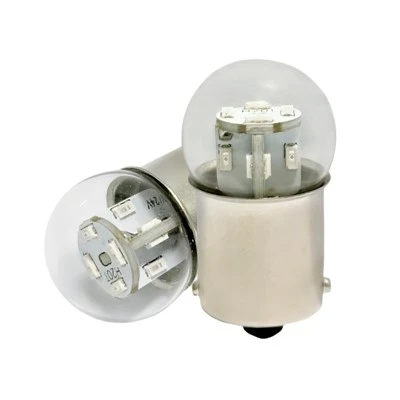
The working principle of automotive LED lights is primarily based on the light-emitting principle of LEDs (Light Emitting Diodes). Here's a detailed explanation:
Core Components of LED Lights
The core component of an LED light is a semiconductor chip. This chip consists of P-type and N-type semiconductors, forming a PN junction. In P-type semiconductors, holes are dominant; while N-type semiconductors are rich in electrons. When these two types of semiconductors are combined, an electric field is formed between them, known as the PN junction electric field.
The Light-Emitting Process of LED Lights
When an LED light is powered on, current flows from the positive electrode (P-region) to the negative electrode (N-region), pushing electrons from the N-region to the P-region. During this process, electrons meet and recombine with holes in the P-region, releasing energy. This energy release is light, i.e., LED light emission. The color of the light emitted by an LED light depends on the composition and structure of the PN junction material; different semiconductor materials emit different colors of light.
Applications of LED Car Lights
In the automotive field, LED car lights are illuminated through a series of precise electronic controls. When the vehicle's ignition switch is activated, the power system sends a signal to the LED headlight control module. Upon receiving the signal, the control module immediately starts supplying power to the LED bulbs. Due to the rapid response characteristics of LEDs, the headlights begin illuminating almost instantly upon power-on.
Furthermore, Hyundai's LED headlights are equipped with an advanced electronic control system that precisely controls the brightness and color of each LED bulb, enabling various lighting modes such as high beam, low beam, daytime running lights, and turn signals.